


The Present Bias Problem
Behavioral economics has documented a reliable feature of human motivation called present bias: people place disproportionately high weight on present costs and benefits relative to future ones. Exercise is the textbook example. The future benefits (health, longevity, energy) are real and significant. The present cost (effort, discomfort, time) is also real and immediate. For many people, present cost consistently overrides future benefit.
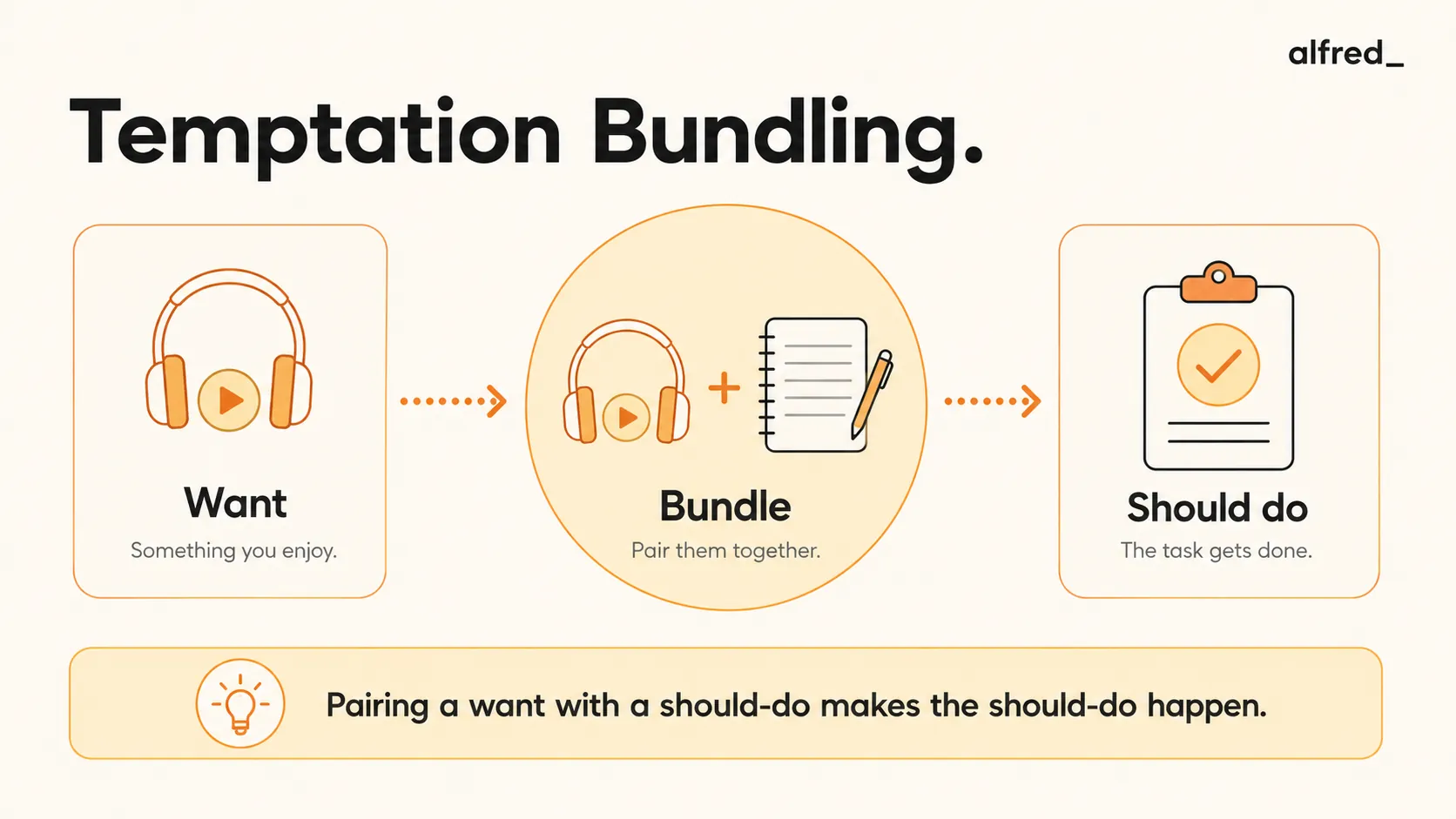
Standard interventions work against present bias: use discipline to override the preference for immediate comfort, build habits until the behavior becomes automatic, or restructure the environment to reduce friction. Temptation bundling works with the present-bias mechanism instead of against it: make the present experience of the difficult activity positive, so the immediate cost-benefit calculation shifts.
The Study: Holding the Hunger Games Hostage
Katherine Milkman, Julia Minson, and Kevin Volpp designed a field experiment at the University of Pennsylvania fitness center. The paper, published in Management Science in 2014, tested whether restricting access to compelling audiobooks and podcasts to gym visits would increase exercise frequency.
The intervention was simple: participants in the full-treatment condition were given iPods loaded with audiobooks (including popular page-turners like the Hunger Games series), but the iPods stayed at the gym. They could only listen to the books while exercising.
51% more gym visits
full-treatment participants (iPod with audiobooks accessible only at the gym) vs control group over the study period: a dramatic increase in exercise frequency from a single behavioral design change
Milkman, Minson & Volpp, Management Science, 2014An intermediate condition (participants were encouraged to restrict their audiobook listening to the gym but were not given a device or enforcement mechanism) produced 29% more gym visits than controls. Restriction enforcement matters: the effect is larger when the temptation is actually withheld outside the target context, not merely encouraged to be withheld.
After the study ended, 61% of participants paid to keep gym-only access to the audiobooks, suggesting the bundling had become something they valued enough to purchase. The effect did decline over the ~9–10 week study period, particularly after Thanksgiving when routine was disrupted, indicating that temptation bundling works best with intentional maintenance and is not immune to contextual disruption.
The Restriction Mechanism
The critical design element that distinguishes temptation bundling from mere enjoyment pairing is restriction. Listening to an audiobook during a workout is pleasant, but if you can listen to the same audiobook anywhere, anytime, the exercise session is no longer the unique access point. The bundle dissolves.
Temptation bundling works because the withheld indulgence creates a specific reason to engage with the target behavior. The gym is where you find out what happens next. The difficult conversation is where you get to have the good coffee. The weekly review is where you allow yourself to watch the episode.
This is also why self-imposed restriction is weaker than structural restriction. The participant who keeps the iPod at the gym (enforced restriction) visits more than the participant who is asked to leave the iPod at the gym (voluntary restriction). The design of the bundle needs to make the indulgence genuinely unavailable outside the target context, not merely unwanted.
Applied to Knowledge Work
Milkman’s research used exercise as the target behavior, but the mechanism generalizes to any activity with delayed benefits and present costs. Applications for knowledge workers:
- Deep work sessions: Reserve a genuinely appealing podcast, audiobook, or playlist exclusively for deep work blocks, unavailable during other work.
- Weekly reviews: Pair the review with a ritual that is available only during the review: a specific type of coffee, a physical notebook used exclusively then, or a walk immediately after completing it.
- Difficult conversations or reviews: Schedule them in a setting or context that includes an appealing element (a preferred location, a post-conversation meal) reserved for those occasions.
- Inbox processing: Allow yourself a specific indulgence only during dedicated email triage blocks, not during deep work.