

Paul O’Neill and Alcoa
Charles Duhigg introduced the keystone habit concept in The Power of Habit (Random House, 2012), with Paul O’Neill’s tenure at Alcoa as the central case study. O’Neill became Alcoa’s CEO in 1987, inheriting an aluminum manufacturing company with decent financials but a safety record that troubled him. At his first investor presentation, he announced that his singular focus would be worker safety, not profitability, not operational efficiency, not competitive positioning.
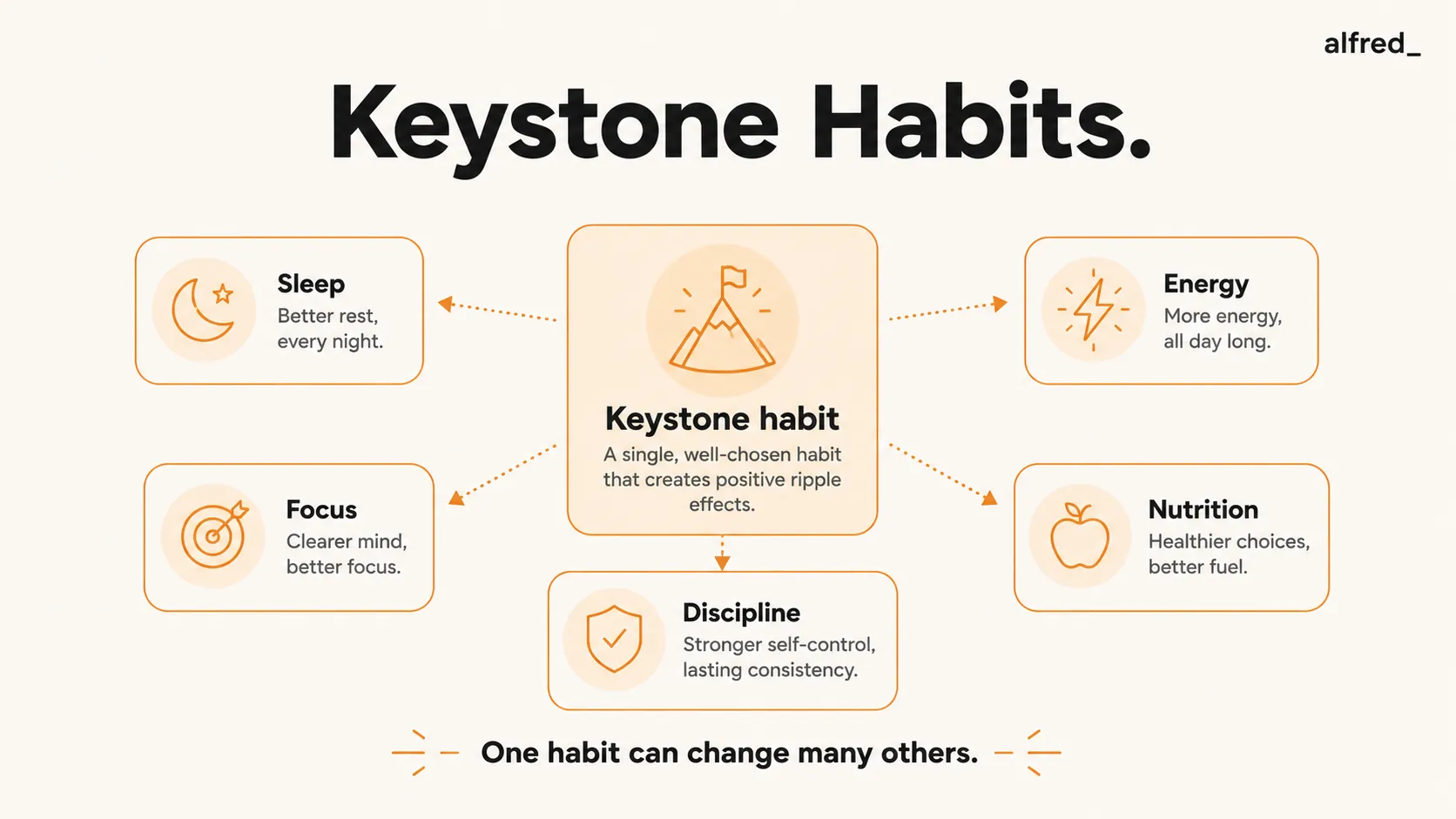
The audience was confused. Investors expected a turnaround strategy. O’Neill’s reasoning was counterintuitive: achieving a safe workplace required every process to work correctly, every near-miss to be reported through a chain of communication that reached him directly, and every supervisor to be immediately accountable for their unit’s safety metrics. Safety, he reasoned, required the operational precision and communication structures that would improve everything else.
1.86 → 0.2 injuries per 100 workers
Alcoa's workplace injury rate fell from 1.86 incidents per 100 workers when O'Neill became CEO in 1987 to 0.2 by the time he departed in 2000, one of the best safety records in American industry. Over the same period, Alcoa's annual net income grew to roughly five times what it had been before his arrival, and its market capitalization rose by $27 billion.
Duhigg, C. (2012). The Power of Habit. Random House, Chapter 4.O’Neill stepped down as Alcoa CEO in 1999 and departed the company at the end of 2000 to serve as U.S. Treasury Secretary under President George W. Bush. During his tenure, Alcoa became one of the most profitable companies in the Dow Jones Industrial Average, an outcome he attributed directly to the cascading effects of the safety habit.
Why Keystone Habits Work
Duhigg proposed two mechanisms through which keystone habits create broader change:
- Small wins. Keystone habits create a series of small, visible successes that activate a psychological pattern: I am someone who can change. Each small win provides evidence for a positive identity, which makes subsequent change attempts feel more achievable. Duhigg cites research showing that small wins create momentum and lower the activation energy for related changes.
- Structural requirements. Some habits have structural prerequisites that, once created, support other behaviors. O’Neill’s safety habit required accountability structures, communication protocols, and operational review processes that Alcoa had not previously built. Once built for safety, these structures were available for other purposes. The keystone habit creates scaffolding that other behaviors can use.
Research on exercise as a keystone habit is a frequently cited example. Studies have found that people who adopt regular exercise routines often spontaneously change eating habits, reduce alcohol consumption, and improve sleep, even when the exercise program did not address these behaviors explicitly. The causal mechanism may include physiological effects of exercise on self-regulation capacity, the identity shift (“I am someone who takes care of their health”), and the routines and time structures that exercise establishes.
Identifying Your Keystone Habit
- Structural dependency. A keystone habit is usually one whose execution requires other behaviors to change. Daily planning creates a natural structure that makes prioritization, time-blocking, and follow-through easier. Regular exercise requires sleep management, schedule protection, and nutrition adjustments. The keystone characteristic is structural necessity: the habit only works if the surrounding environment is reorganized.
- Identity anchoring. The most powerful keystone habits are ones that create or confirm a desirable professional identity. “I am someone who reviews priorities every morning” is an identity claim that resists erosion. “I am someone who follows up on every commitment” makes follow-up a matter of self-consistency, not just task management. Identity-anchored habits are more durable than goal-anchored ones because they connect to self-concept rather than a specific outcome.
- The morning review as a professional keystone. For knowledge workers, a consistent morning review habit has keystone characteristics: it requires clear priority systems (forcing organizational structure), creates a daily decision about where attention will go (reducing reactive drift), and builds an accumulating understanding of how time is actually spent versus how it is planned. The review habit does not do the work, but it creates the conditions under which other work habits function better.